

Published September 14, 2026
What You Don’t See in a Maui Real Estate Listing

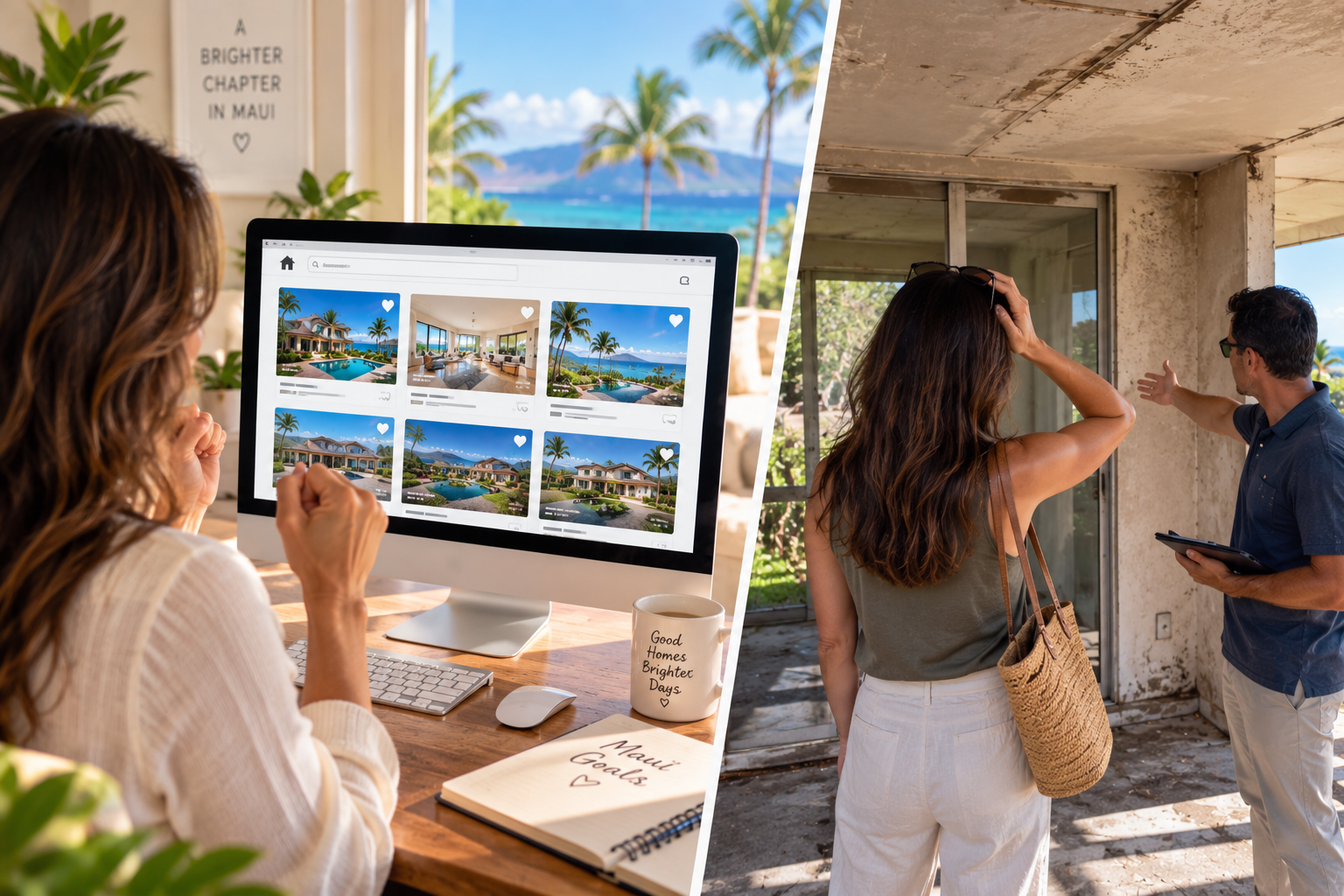
Beautiful photos can show you the property. They can’t always show you whether it’s the right property. Here’s what buyers should really be looking at before falling in love with a Maui home.
Scrolling through Maui real estate listings can be addictive.
One home has the ocean view you've always imagined. Another has a beautiful kitchen. Another looks like the perfect vacation retreat. You save a few favorites, compare the prices, and start imagining what life there might look like.
And that's exactly where buyers need to slow down.
Because a real estate listing is designed to make you interested in a property. It isn't designed to tell you everything you need to know about it.
That doesn't make the listing misleading. It's simply incomplete by nature.
The photos show you what the property looks like at its best. The description highlights its features. The asking price tells you what the seller is hoping to receive.
But there is an entire layer of information underneath those things that can determine whether the property is actually a good fit.
That is the part buyers need to investigate.
A Beautiful Listing Doesn't Tell You the Whole Story
A well-presented Maui property can look almost irresistible online.
You see the lanai, the pool, the kitchen, the landscaping, and perhaps an incredible ocean or mountain view. Everything looks clean, bright, and perfectly positioned.
Then you walk through the property in person and start noticing things the camera didn't emphasize.
Maybe the layout doesn't work as well as you thought.
Maybe the surrounding road is busier than expected.
Maybe the view is beautiful from one particular angle but limited from the rooms that matter most to you.
Maybe the property needs more maintenance than you anticipated.
Maybe the monthly ownership costs change the financial picture.
Or maybe nothing is technically wrong with the property—it simply isn't the right fit once you experience it in person.
This is why buyers should never make a major decision based solely on what they see online.
The Asking Price Doesn't Tell You What a Property Is Worth
One of the easiest mistakes to make is assuming that the asking price represents the property's actual market value.
It doesn't.
It's simply the price at which the seller has chosen to bring the property to market.
Understanding value requires context.
What have similar properties actually sold for? How recently did they sell? How does this property compare in size, condition, location, views, renovations, amenities, and overall appeal? How long has the property been available? Have there been price changes?
Those questions matter far more than simply looking at a number and deciding whether it feels high or low.
And sometimes a property that initially looks expensive may make sense once you understand its characteristics.
Other times, a property that looks like a great deal may have a reason for being priced where it is.
The number on the listing is the beginning of the conversation, not the conclusion.
You Can't Fully Understand a Maui Neighborhood From a Map
Maui is small enough to look simple on a map and diverse enough to make that assumption dangerous.
Wailea, Kihei, Makena, West Maui, Upcountry, and Central Maui all offer very different environments and lifestyles.
Even within the same community, the experience can change from one neighborhood or property to the next.
A buyer who wants to walk to restaurants and spend weekends near the beach may have very different priorities from someone looking for privacy, space, views, or a quieter residential setting.
And there are practical things that don't necessarily appear in a listing description.
How does the area feel during different times of day?
What does access look like?
How close are the services you actually use?
What is the surrounding development like?
What might matter to you five years from now that doesn't seem important today?
The right Maui location isn't necessarily the most famous one. It's the one that fits the way you actually want to live.
The View Is Important. So Is Everything Around It.
Let's be honest: views are a huge part of the appeal of Maui real estate.
An ocean view can completely change how a property feels.
But buyers should look beyond the photograph.
A listing may show you the best possible view from the best possible position. What you don't see may be just as important.
Is the view likely to remain unobstructed? What surrounds the property? How much privacy does it actually have? What does the property look like from the living room, bedroom, lanai, and outdoor spaces?
And perhaps most importantly, does the view justify the premium you're paying for it?
There is nothing wrong with paying more for something you genuinely value.
The problem is paying more without understanding exactly what you're paying for.
The Property's Condition May Be More Important Than Its Finish
New countertops, beautiful flooring, designer furniture, and fresh paint photograph well.
But they aren't necessarily the most important things to investigate.
A buyer should also be thinking about the property's underlying condition and the maintenance it may require.
How old are the major systems? What has been repaired or replaced? Are there signs of deferred maintenance? Are there areas that deserve a closer inspection?
Maui's climate, salt air, sun, moisture, and tropical environment can all make property maintenance an important consideration.
A home can look fantastic and still require significant attention.
That's why professional inspections and proper due diligence matter.
You don't want to discover the expensive part of the property after you've already fallen in love with it.
The Monthly Cost Can Change the Entire Decision
A buyer might look at a $900,000 property and a $1 million property and assume the first one is automatically the more affordable choice.
Not necessarily.
The purchase price is only one part of ownership.
Property taxes, insurance, HOA or association fees, maintenance, utilities, repairs, landscaping, property management, and other expenses can all affect what a property actually costs you over time.
For condos, the association deserves particular attention. Monthly fees are important, but so are reserves, insurance, upcoming projects, and potential assessments.
This is one of those areas where a property can look attractive on the surface and become much less attractive once you understand the complete financial picture.
The better question isn't “Can I afford the purchase price?”
It's “Am I comfortable with the full cost of owning this property?”
If You Plan to Rent It, Don't Assume Anything
This is especially important for buyers who are looking at Maui property as an income-producing asset.
A property may look perfect for vacation rentals.
That doesn't mean you can necessarily operate it as one.
Rental use can be affected by zoning, county regulations, permits, property classification, and condominium or community rules.
If rental income is part of the reason you're buying, that needs to be investigated before you purchase.
Don't rely on what a listing says.
Don't rely on what another owner told you.
And don't build your financial expectations around rental income until you've confirmed that the intended use is actually permitted for the property you're considering.
Hope is not a real estate strategy. Verification is.
Sometimes the Biggest Red Flag Is What You Aren't Asking
Buyers are usually good at asking questions about the things they can see.
How old is the kitchen?
How big is the yard?
Does the furniture come with the property?
How far is the beach?
Those are perfectly reasonable questions.
But the more important questions can sometimes be less obvious.
Why has the property been on the market this long?
Why did the seller reduce the price?
How does it compare with the properties that recently sold?
Are there upcoming expenses?
What restrictions apply?
What should I know about the surrounding area?
Is there anything about this property that could make it harder to sell later?
You don't need to be suspicious of every property.
You simply need to be curious enough to understand it.
The Right Realtor Shouldn't Just Show You Homes
This is where local experience becomes valuable.
A good Maui Realtor isn't simply there to unlock a door and send you listings.
The real value comes from helping you understand what you're looking at.
That means knowing the differences between communities, recognizing when a price deserves a closer look, understanding which questions should be asked, noticing details that a buyer may overlook, and helping connect the dots between the property and the buyer's actual goals.
And sometimes, the best advice isn't to make an offer.
Sometimes it's to wait.
Sometimes it's to negotiate.
Sometimes it's to investigate further.
And sometimes it's simply:
“I don't think this is the right property for you.”
That may not be the answer a buyer wants to hear.
But it's the kind of answer that can save someone from making an expensive mistake.
Buying in Maui Shouldn't Feel Like Guesswork
You don't have to know everything about Maui real estate before you start looking.
That's what the process is for.
Maybe you know you want to be near the ocean but don't know which community fits you.
Maybe you have a budget but aren't sure what that budget realistically buys.
Maybe you're considering a second home and haven't decided whether a condo or single-family property makes more sense.
Maybe you're simply curious about the market and want to understand what's actually available.
Those are all reasonable places to start.
The important thing is to have someone who will help you ask better questions instead of simply showing you more properties.
Because seeing 100 listings doesn't necessarily make you a more informed buyer.
Understanding five properties really well might.
Look Beyond the Listing
The best Maui property isn't necessarily the one with the most beautiful photographs.
It isn't necessarily the one with the lowest price.
And it isn't necessarily the one that makes you fall in love the fastest.
It's the one that continues to make sense after you've looked beyond the surface.
Look at the numbers.
Look at the neighborhood.
Look at the condition.
Look at the ownership costs.
Look at the rules.
Look at what you're actually getting.
Then ask whether the property fits the life you're planning to live.
That's how you turn a Maui real estate search into a smart decision.
And if you're exploring Maui real estate, sometimes the most valuable first step isn't finding the perfect listing.
It's having a conversation with someone who knows what to look for once you find one.
Maui Real Estate FAQ
1. What should I look for beyond the photos in a Maui real estate listing?
Look at the property's actual condition, comparable sales, location, ownership costs, permitted uses, HOA or association information, surrounding properties, and any potential future expenses.
2. How do I know if a Maui property is fairly priced?
Compare it with relevant recent sales and current competition while considering differences in location, condition, size, views, renovations, amenities, and other property-specific characteristics.
3. Why is local knowledge important when buying Maui real estate?
Maui's communities and property types can vary significantly. Local knowledge can help buyers better understand neighborhood differences, market conditions, property-specific considerations, and questions worth asking during the buying process.
4. Should I trust everything I see in a Maui property listing?
A listing is an important source of information, but it shouldn't be treated as the complete picture. Buyers should conduct appropriate due diligence and independently verify important information before purchasing.
5. What should I know if I want to rent my Maui property?
Rental use isn't automatically permitted simply because a property is located in Maui. Buyers should verify applicable zoning, county requirements, permits, property rules, and any condominium or community restrictions before purchasing with rental use in mind.
6. Is the lowest-priced Maui property necessarily the best deal?
No. Purchase price is only one part of the financial picture. Insurance, taxes, HOA fees, maintenance, repairs, assessments, and other ownership costs can significantly affect the overall value of a property.
Final Thoughts
Maui real estate is beautiful.
That's part of what makes buying here so exciting—and part of what can make it easy to get caught up in the dream.
But a beautiful view shouldn't stop you from asking difficult questions.
The more you understand about a property before you buy it, the better positioned you are to know whether it's truly right for you.
Because the things you don't see in the listing can sometimes matter just as much as the things you do.
And that's where having the right local perspective can make all the difference.

Nicole Kovach
| Nicole Kovach | Keller Williams Realty Maui
or another way