


Published October 2, 2026
Why Selling Your Maui Home This Fall Takes More Than Just Putting It on the Market

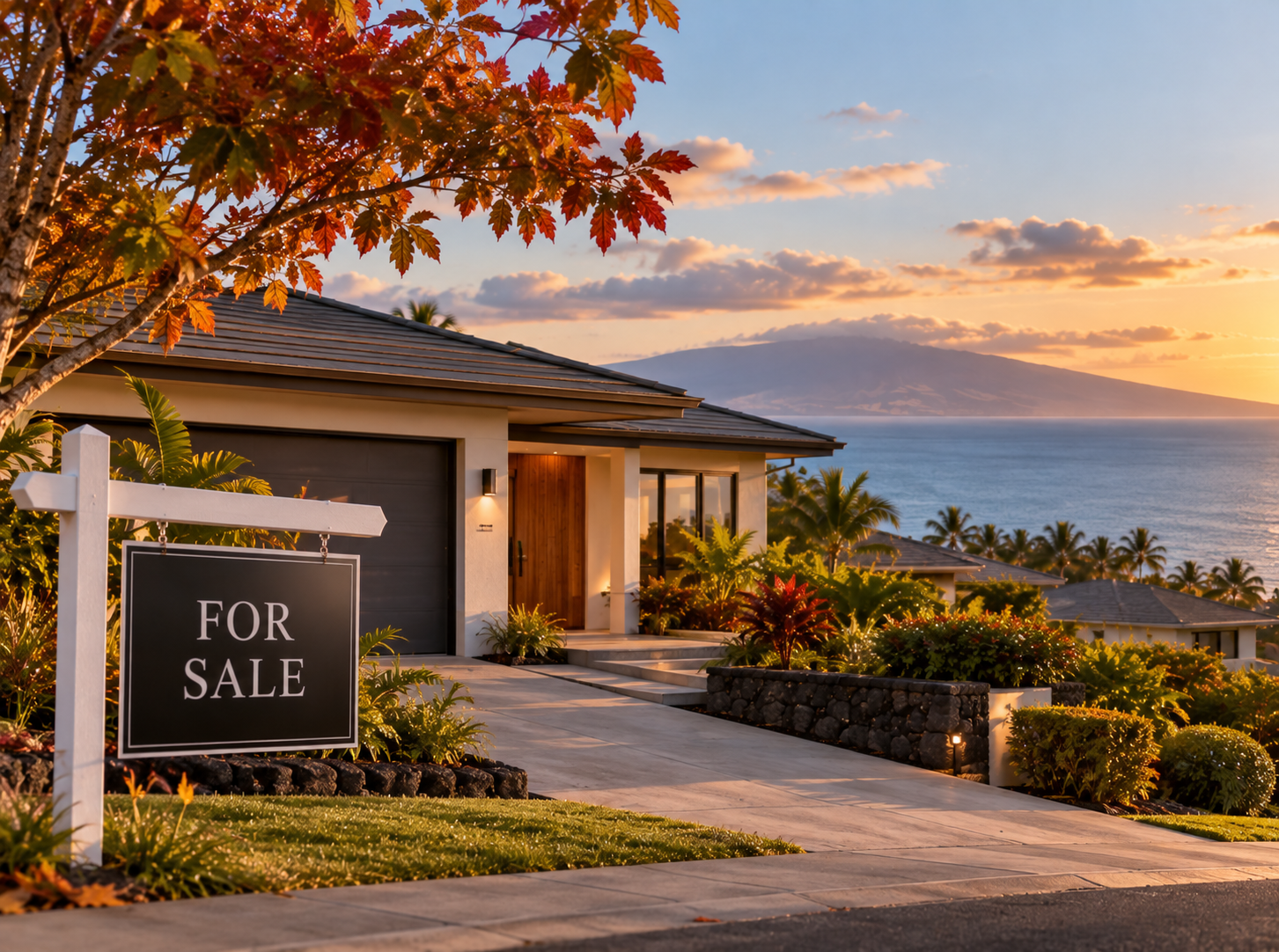
Fall can be a meaningful time to sell a Maui property, but the season itself won't sell your home. In a market where buyers have options and properties can take time to move, preparation, pricing, and positioning matter more than ever.
Fall Is Here But Buyers Are Still Looking Carefully
Selling a home in Maui has never been as simple as putting a sign in the yard and waiting for the right buyer.
Today's buyers have more information at their fingertips, more properties to compare, and more time to think before making a decision. That makes the way a property enters the market especially important.
Recent Maui data illustrates why.
In August 2026, Maui recorded 64 single-family home sales, compared with 54 in July. The median single-family sales price was $1.2 million. At the same time, active single-family inventory reached 470 properties, a 12-month high according to a September market analysis based on Maui MLS data. Pending single-family sales, however, fell to 94, the lowest figure in that 12-month comparison.
That combination matters for sellers.
Homes are still selling. But buyers have choices, and that means a property needs to compete for attention.
The Biggest Mistake Sellers Can Make This Fall
It is easy to assume that if your neighbor sold their home for a certain price, yours should command something similar.
Real estate doesn't work quite that way.
Two properties in the same general area can have very different values because of their condition, lot, views, layout, improvements, HOA costs, location within a neighborhood, permitted use, and the competition available to buyers at the same time.
Current Maui market data reinforces the importance of looking beyond island-wide averages. One September 2026 analysis found substantial differences in available inventory depending on property type, price range, and location. For example, single-family inventory was estimated at about 8.1 months island-wide, while higher price ranges had considerably more supply.
That means a seller shouldn't ask only:
“What are homes selling for in Maui?”
The more useful question is:
“What are buyers comparing my property against right now?”
That is where pricing strategy becomes important.
A High Asking Price Does Not Automatically Mean a Higher Sale Price
This is one of the hardest things for sellers to hear.
Starting high may feel like the safest way to protect your property's value. But an asking price that doesn't align with current competition can reduce the number of serious buyers who even consider the property.
A recent Maui market analysis found that 46% of active properties were priced below their original list price as of September 11, 2026.
Another September analysis reported that Maui condo sellers were increasingly making price adjustments, while active condo listings were spending substantially longer on the market than properties that had already sold.
That doesn't mean every Maui seller needs to reduce their price.
It means the initial pricing decision matters.
If buyers see your home alongside several comparable properties, they're going to make their own comparison. Your home needs to make sense within that competitive set.
Your First Impression Starts Before the Showing
Before a buyer walks through your front door, they may already have an opinion about your property.
They've seen the photos.
They've looked at the price.
They've compared the square footage.
They've checked the location.
They may have looked at competing listings before deciding whether yours deserves a closer look.
That's why preparing a Maui home for sale isn't simply about cleaning the house.
It's about making sure the property photographs well, presents well, and communicates its value clearly.
Outdoor living spaces can be particularly important for a Maui property. A lanai, landscaped yard, pool area, garden, view, or connection between indoor and outdoor spaces can help buyers understand the lifestyle the property offers.
But presentation shouldn't hide problems.
If there are maintenance issues, deferred repairs, or other conditions that could affect a buyer's decision, sellers should understand them before going to market.
Hawaii law requires disclosure of material facts relating to residential real property, and the state's Real Estate Commission identifies property condition, structural issues, environmental concerns, and other property-related matters among areas that may require attention. A seller disclosure is not a substitute for an inspection or professional advice.
In other words, preparation isn't about making a property look perfect.
It's about knowing what you're selling.
Maui Buyers Are Looking Beyond the Pretty Photos
A beautiful view can attract attention.
It doesn't necessarily close a transaction.
Buyers may also want to understand property taxes, insurance, HOA expenses, maintenance requirements, rental restrictions, zoning, property condition, and other costs or limitations that affect ownership.
This can be particularly important for Maui properties that have historically appealed to second-home or vacation-property buyers.
Maui County's property-tax system includes different classifications for properties, including owner-occupied, long-term rental, hotel and resort, and transient vacation rental classifications.
Short-term rental considerations can also be complicated by property-specific rules and changing county regulations. Maui County has adopted legislation affecting transient vacation rentals, including changes involving apartment-zoned properties.
For sellers, this means the marketing conversation shouldn't stop at:
“Look at this beautiful Maui home.”
It should also give qualified buyers the information they need to understand what they're actually purchasing.
If Your Property Is a Rental There Is Even More to Consider
If you're selling a property that has been used as a vacation rental or another type of rental, its rental history may be part of the buyer's decision.
But sellers should be careful about presenting rental income or future rental potential as if it were guaranteed.
The property's zoning, permits, classification, association rules, and applicable county requirements all matter.
Maui County also administers its own Transient Accommodations Tax program, with its online myMauiTAT system scheduled to launch October 5, 2026.
For a seller, this is another reason to make sure the property's documentation and representations are accurate before marketing begins.
Fall Doesn't Mean You Should Rush
There is another important point worth making.
Selling this fall doesn't mean you should sell just because it's fall.
There is no universal rule that says every Maui property will sell faster or for more money simply because it is listed during a particular season.
Your reason for selling matters.
Your timeline matters.
Your property's location and condition matter.
And the competition you face when your home actually goes on the market matters.
If you need to sell within a certain timeframe, that changes the strategy. If you have more flexibility, you may have different options.
The important thing is to understand those options before you put your property on the market.
What Sellers Should Do Before Listing This Fall
Start by looking at your property objectively.
- What would a buyer notice within the first 30 seconds?
- What competing homes would they compare yours against?
- Are there repairs you've been putting off?
- Does the landscaping make a strong first impression?
- Are your best features being shown properly?
- Is the asking price supported by recent comparable sales and current competition?
- Are there documents or property details that should be reviewed before marketing begins?
And perhaps most importantly, are you pricing based on today's market, or based on what you believe your home should be worth?
Those are very different things.
The Goal Is Not Just to Get Listed
Getting your property onto the MLS is not the same thing as successfully selling it.
The goal is to attract the right buyers, generate meaningful interest, create strong opportunities for showings, and ultimately negotiate a transaction that makes sense for your circumstances.
In a market where properties can sit for months, the first few weeks deserve attention.
If a home launches without a clear strategy and fails to attract meaningful interest, the seller may eventually have to make changes after buyers have already formed an impression of the property.
That's why the work before launch can be just as important as what happens after the listing goes live.
Why Local Knowledge Matters When Selling on Maui
Maui isn't one uniform real estate market.
A property in Kihei isn't competing in exactly the same way as a property in Wailea. A home in Upcountry Maui has a different buyer profile and set of considerations from a beachfront property. A condo can have a completely different set of financial and ownership considerations from a single-family home.
Even within the same neighborhood, two properties can behave differently.
The useful question isn't simply what the Maui median price is.
It's what is happening with properties like yours.
That means looking at comparable sales, active competition, pending transactions, days on market, price adjustments, property-specific characteristics, and the factors that could influence the buyer pool.
That local context can help a seller move from guessing to making a more informed decision.
Is Selling Your Maui Home This Fall Right for You?
Maybe.
But the answer shouldn't come from a generic seasonal slogan.
It should come from your goals and the actual market surrounding your property.
If you've been thinking about selling, fall can be a good time to stop wondering and start gathering information.
You don't have to list immediately.
You can start by understanding what your home may realistically compete against, what preparation it may need, and what the current market could mean for your timeline.
Because the strongest selling strategy doesn't begin when the listing goes live.
It begins before the market ever sees your home.
Frequently Asked Questions
1. Is fall a good time to sell a home in Maui?
Fall can be a reasonable time to sell, but there is no guarantee that a property will sell faster or for more money simply because it is fall. Current inventory, pricing, property condition, location, competition, and buyer demand all influence the outcome.
2. What is happening in the Maui real estate market right now?
August 2026 data showed 64 single-family home sales and a $1.2 million median sales price. Active single-family inventory reached 470 properties in one September market analysis, while pending sales were 94. These figures indicate that homes are still selling, but sellers are operating in a market where buyers have meaningful choices.
3. Should I price my Maui home higher to leave room for negotiation?
Pricing should be based on current comparable sales, active competition, property characteristics, and your goals. Setting an asking price substantially above the competitive market can reduce the number of buyers who consider the property, while pricing too aggressively low can leave money on the table. There is no universal percentage that works for every property.
4. What should I do before listing my Maui home?
Review the property's condition, address appropriate maintenance, improve presentation, gather relevant documentation, understand comparable properties, and develop a pricing and marketing strategy based on current market conditions.
5. Do Maui sellers have to disclose property problems?
Hawaii law requires disclosure of material facts concerning residential real property. Sellers should work with their real estate professional and appropriate qualified professionals when determining what needs to be disclosed. The disclosure statement is not a substitute for an independent inspection.
6. Does rental status affect selling a Maui property?
It can. Zoning, permits, property classification, association rules, and applicable county regulations can affect how a property may be used and how buyers evaluate it. Sellers should make sure any statements about current or potential rental use are accurate and supported by the property's documentation.

Nicole Kovach
| Nicole Kovach | Keller Williams Realty Maui
or another way